Vehicle Modification in Kerala: CM Master Plan for Legalization
Kerala Chief Minister V.D. Satheesan has promised to legalize vehicle modification in the state, sparking widespread discussion among automobile enthusiasts. Currently, Section 52 of the Motor Vehicles Act 1988 and a 2019 Supreme Court ruling restrict modifications that alter a vehicle’s basic structure. However, the Chief Minister’s repeated assurance suggests the government has identified legal pathways to make this possible.
The Constitution offers several routes. Article 254(2) allows states to legislate on concurrent list subjects, including motor vehicles. Kerala can pass a bill in the assembly and secure the President’s approval, enabling a state law that overrides the central act on this matter.

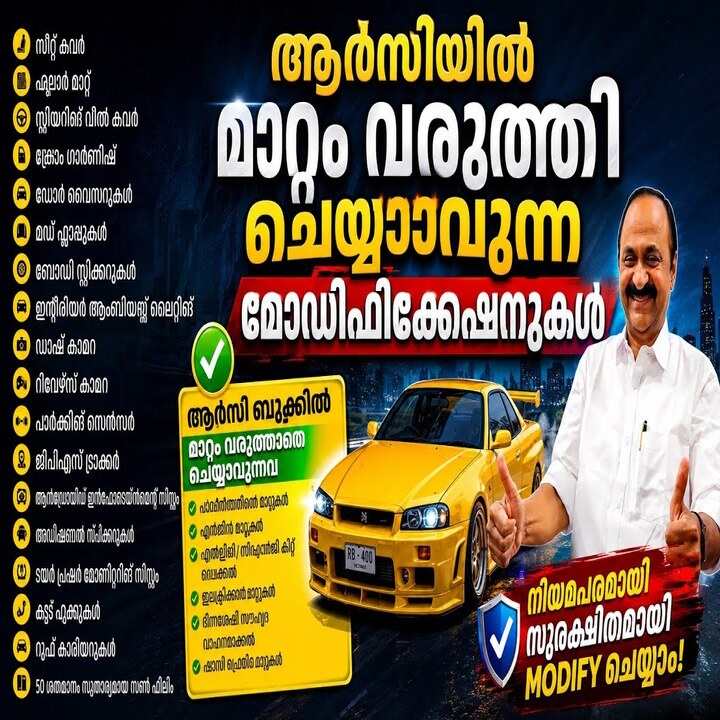
A more practical approach is an executive order redefining “alteration.” The state government can clarify that cosmetic changes like alloy wheels, bumpers, roof rails, color changes, and extra lights do not constitute structural modification. This can be done through Motor Vehicles Department guidelines without central or court approval.
A third option is a state-level certification system. Modeled after practices in foreign countries, vehicle owners could modify their vehicles and obtain safety certificates from government-approved testing centers. Section 52 itself provides provisions for such exemptions, and Kerala could propose a pilot program to the Ministry of Road Transport.

Finally, the state could directly approach the Supreme Court seeking a review of the 2019 ruling. The economic argument is strong, with lakhs of young Keralites employed in the modification industry, including garages, accessory shops, and paint workshops.
Legalizing vehicle modification will not happen overnight. It requires legislative action, rule changes, or court relief, all of which take time. But the Chief Minister’s repeated assurances indicate the government has already obtained legal advice on these pathways, making it a realistic possibility rather than an empty promise.